



A Massachusetts federal court has issued an order that postpones the Department of Homeland Security’s (DHS) Final Rule that replaces “duration of status (D/S)” with fixed-term admission for F-1, J-1, and I-1 visas.
On July 15, 2026, the DHS Federal Register published its Final Rule implementing fixed periods of admission for international students, exchange students, and media professionals. This new framework, which would replace the long-standing duration of status method, was to go into effect on September 15, 2026.
Key Takeaways
- The Fixed-Term System Will Not Be Implemented Yet: The injunction from the federal court stops the fixed-term system from taking effect on September 15, 2026.
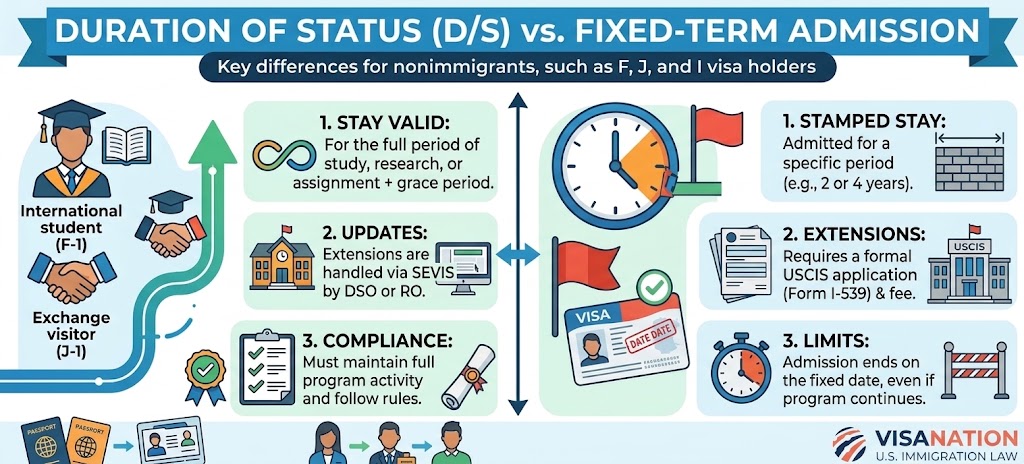
- Duration of Status Is Still in Use: The current duration of status system is still in place. Those with F-1, J-1, and I-1 visas are still admitted for their full program length as long as their status remains valid.
- No Need for Formal USCIS EOS: Applicants do not immediately need to apply for an EOS if their educational program is longer than the four-year fixed term.
- Extensions for Programs Are Still Through SEVIS: Designated School Officials and Responsible Officers can still grant extensions through SEVIS without the need to petition USCIS.
Duration of Status vs Fixed-Term Admission
Under the duration of status system, student visa terms vary depending on the length of time needed to complete their educational program. Switching to a fixed-term approach would grant the visa holder a set amount of time in the U.S. (a maximum of four years) rather than their program length. This means that students would need to apply for a formal Extension of Stay (EOS) with USCIS if their program outlasted their visa term.
However, the latest order from the federal court delays the effective date until the litigation is resolved. The court found that the Final rule had a good chance of being found to violate the Administrative Procedure Act, specifically that the DHS:
- Did not consider the likely economic effects that the rule would cause
- Disregarded viable alternatives
- Ignored concerns posed by the public
- Lacked a connection between the rule and the objectives of the department
While the injunction delays the Final Rule, it does not eliminate it. Those who might be affected by the rule should make sure they stay up-to-date on the latest information regarding the outcome of this litigation.