

Beginning this fall, most newly admitted F-1 students will no longer be allowed to remain in the United States simply by maintaining valid student status. Instead, they will receive a fixed period of admission, generally not exceeding four years. Students who need additional time to complete their degree or academic program will be required to obtain an extension of stay from U.S. Citizenship and Immigration Services (USCIS).
The change marks a fundamental shift in how international students maintain lawful status and introduces additional immigration compliance obligations for universities, research institutions, medical training programs, and the more than one million international students studying in the United States.
A Fundamental Shift Away from Duration of Status
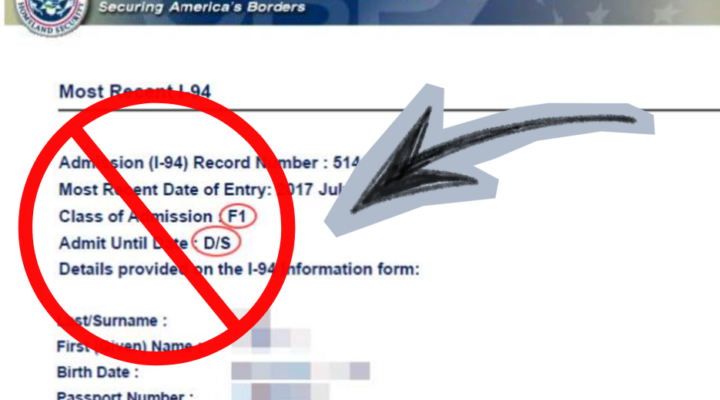
For nearly half a century, most F-1 students entered the United States under the Duration of Status system. Rather than receiving a specific expiration date on their admission record, students were authorized to remain in the country for as long as they continued to satisfy the requirements of their immigration classification.
In practical terms, this meant students could complete lengthy bachelor’s, master’s, doctoral, or professional degree programs without repeatedly applying to extend their immigration status. Their lawful presence was tied to continued enrollment and compliance with F-1 regulations, not to a predetermined end date.
The new rule abandons that approach.
Going forward, lawful status will depend not only on maintaining academic eligibility but also on ensuring that the period of admission has not expired.
What the Final Rule Provides
Under the final regulation, DHS will generally admit F-1 students and J-1 exchange visitors for the duration of their approved academic or exchange program, up to a maximum of four years, followed by a 30-day grace period.
Foreign media representatives admitted under the I visa classification will generally receive admission periods of up to 240 days, subject to limited exceptions.
Individuals whose programs continue beyond the expiration of their authorized stay must file an Extension of Stay application with USCIS before their current period of admission ends. This requirement will also apply to qualifying dependents, including F-2 and J-2 family members.
As a result, immigration compliance will increasingly resemble other temporary employment-based visa categories, where maintaining lawful status requires both continued eligibility and timely extensions.
Who Will Feel the Greatest Impact?
Although virtually all new F-1 and J-1 admissions will be affected, certain groups are expected to experience the greatest administrative burden.
Programs frequently extending beyond four years include:
- Ph.D. and doctoral research programs
- Medical residency and fellowship training
- Scientific research appointments
- Long-term academic exchange programs
- Certain dual-degree and interdisciplinary graduate programs
Students in these programs will likely need to file one or more Extension of Stay applications during their education, adding both cost and processing uncertainty to what has traditionally been a straightforward immigration process.
Universities and international student offices will likewise face increased responsibilities in monitoring admission periods and advising students on extension deadlines.
Why DHS Is Making This Change
According to DHS, the rule is designed to strengthen oversight of the student and exchange visitor system.
The agency cites several policy objectives, including:
- improving immigration compliance;
- reducing visa overstays;
- enhancing national security; and
- protecting the integrity of educational exchange programs.
The rule reflects DHS’s broader trend toward increased monitoring of nonimmigrant compliance and expanded scrutiny of temporary visa programs.
Transition Rules for Current Students
Students already present in the United States under the existing Duration of Status framework will not necessarily be required to immediately apply for extensions.
The final regulation includes transition provisions allowing many current students to remain under their existing status through their current academic program or for up to four additional years, depending upon the circumstances described in the rule.
Because these provisions are fact-specific, students should carefully review their immigration records and consult with their Designated School Official (DSO) or immigration counsel to determine how the transition rules apply to their individual situation.
When Does the Rule Take Effect?
The final regulation will be published in the Federal Register on July 17, 2026, and will become effective on September 17, 2026, sixty days after publication.
Students entering the United States on or after the effective date should expect to receive a fixed period of admission rather than the traditional D/S designation.
Concerns from the Academic Community
Universities, research institutions, and medical organizations have expressed concern that the new framework may create unnecessary administrative burdens without providing meaningful benefits.
Among the principal concerns are:
- interruptions caused by delayed Extension of Stay adjudications;
- increased legal and filing costs for students;
- additional compliance obligations for colleges and universities;
- uncertainty for research projects extending beyond four years; and
- Complications for graduate medical education programs whose training often exceeds the initial admission period.
Critics also argue that increasing immigration bureaucracy for international students could make competing countries with more predictable immigration systems increasingly attractive destinations for global talent.
Practical Considerations for International Students
The new rule places greater importance on proactive immigration planning.
Students should pay close attention to the expiration date listed on their Form I-94, rather than assuming they may remain in the United States simply because they continue to maintain F-1 status. Those whose programs may exceed their authorized admission period should begin preparing extension applications well in advance to minimize the risk of status interruptions.
Educational institutions will also need to ensure that international student offices have procedures in place to identify students approaching the end of their authorized admission and assist them with timely filings.
Looking Ahead
While the practical impact of the rule will become clearer as DHS begins implementation, one point is already evident: immigration compliance for international students is becoming increasingly documentation-driven.
For many students, maintaining lawful status will now require more than academic success. It will also require careful attention to immigration deadlines, timely extension filings, and ongoing coordination with both educational institutions and immigration counsel.
International students and exchange visitors who anticipate remaining in the United States beyond their initial admission period should seek legal advice well before their authorized stay expires to ensure uninterrupted lawful status.