For international businesses, there are plenty of reasons to move top talent to your operations in the United States. Getting a new location started abroad can be difficult without utilizing some of your existing talent, and established locations can be bolstered by overseas employees. The L-1A visa allows qualifying employers in the U.S. to transfer their executive employees and managers from offices overseas to U.S. locations.
Regardless of whether you are starting a new office in the U.S. or moving talent to an existing location, the L-1A visa represents a versatile route with dual intent for international executives and managers.
What Is an L-1A Visa?
The L-1A is a nonimmigrant visa that specifically allows international companies with U.S. entities to sponsor their managers and executives to be transferred from foreign locations to domestic ones. Foreign companies that do not have a U.S. location can also use the L-1A to start a new office by sending a manager or executive over for that purpose.
Key L-1A Features
The L-1A has several benefits that set it apart from other nonimmigrant employment visas:
- No Caps or Limits – While other visas such as the H-1B have annual limits on how many visas are issued each year, the L-1A has no such restrictions. Petitions for the L-1A can be made at any time, and any number of visas can be granted to qualified beneficiaries.
- Dual Intent Permitted – Those on L-1A status can pursue permanent resident (green card) status without impacting their existing nonimmigrant status.
- Work Authorization for Spouses – The dependents (spouses and children under 21) of L-1A visa holders can receive L-2 visas, allowing them to work in the U.S. incident to their status. This means that they do not need to apply for Employment Authorization Documents (EAD) to work in the U.S., and their work eligibility is instead tied to their status as a dependent of an L-1A visa holder.
What Are the Sponsoring Employer and Beneficiary L-1A Visa Requirements?
In order to be eligible for L-1A visa status, the employer sponsoring the visa and the employee need to satisfy specific requirements outlined by the United States Citizenship and Immigration Services (USCIS):
Employer Requirements
- Qualifying Corporate Relationship
- Active Business Operation in the U.S. and Abroad
- Physical Premises
- Financial Viability
Employee Requirements
- Must have spent one continuous year of the last three years employed by the sponsoring employer overseas
- Must have had a managerial or executive position in the foreign entity
- Must be entering into a managerial or executive position in the U.S. entity
Employer Criteria
- Qualifying Corporate Relationship: The entity in the U.S. needs to have a qualifying relationship with the overseas entity. This means that the U.S-based entity can be a subsidiary, branch, affiliate, or parent of the foreign one. This is often represented by at least 50% ownership or management control being shared between the two legal entities.
- Doing Business Standard: The sponsoring entity must currently be or have plans to be doing business in both the U.S. and at least one other country. This can either be directly or indirectly via a qualifying organization, but it must last the entire duration of the L1-A beneficiary’s stay in the U.S.
Employee Criteria
- Previous Employment Overseas: The L-1A employee must have been working for the sponsoring employer at its overseas location for at least one year in the last three years.
- Qualifying Role: The employee must be serving in a managerial or executive capacity both in the prior role overseas as well as the proposed role in the U.S.
What Is the Difference Between Executive vs. Managerial Roles?
When looking at the roles that qualify as managerial or executive, USCIS looks at the job responsibilities rather than just the title. Simply having “manager” or “director” in a title does not automatically mean it qualifies.
L-1A Visa Executive Capacity
For USCIS, an executive is an employee who is able to make wide-ranging decisions without a significant amount of supervision or oversight. Adjudicators are looking for individuals who:
- Direct the managers of the company or control a major department or function of the organization.
- Determine the goals and policies of the department or the company as a whole.
- Make large-scale decisions and are granted a significant amount of authority or discretion
- Are under little supervision or management from executives at higher levels or boards of directors
L-1A Visa Managerial Capacity
USCIS views managers as employees who supervise and dictate the tasks of other direct reports. They may also oversee an essential function or department of the company. Here is how USCIS views both roles:
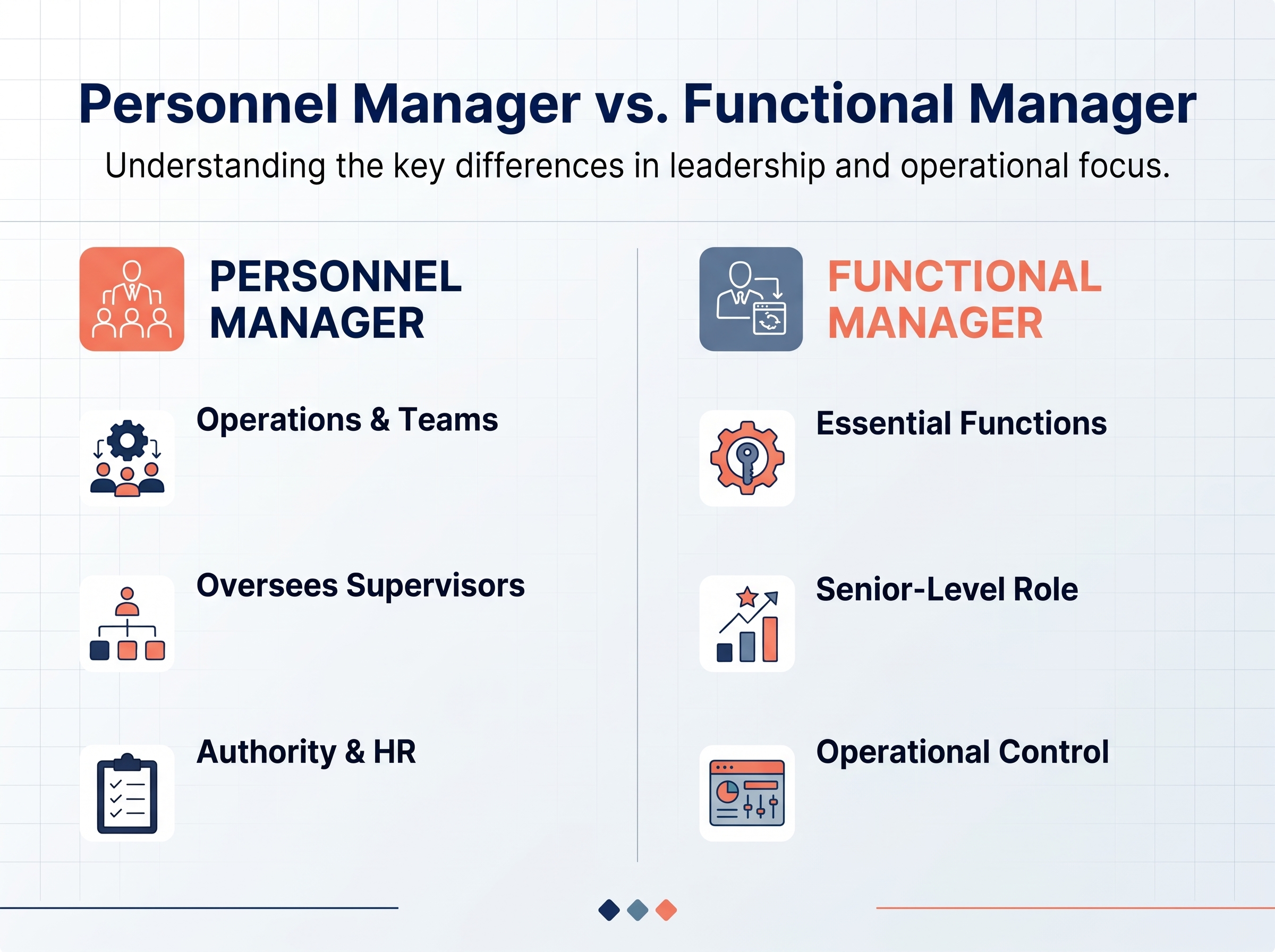
- Personnel Manager
- Manages the day-to-day tasks and operations of a department, subdivision, or function of the organization.
- Oversees the work of others in supervisory roles. If the employee’s direct reports are not supervisors, they are unlikely to qualify. The exception to this is if the employees are in high-skill positions such as developers, engineers, or analysts.
- Has the authority to hire and fire reports as well as recommend promotions and approve leave.
- Functional Manager
- Oversees what is considered an essential function of the company, but does not necessarily have employees that directly report to them.
- Functions at a senior level within the company hierarchy
- Controls the day-to-day operations of the designated department or function
What Is the Difference Between Established Offices vs New Office L-1A Visa Petitions
Much of what is granted with L-1A status depends on whether the beneficiary employee is being sent to an existing (or established) office or is coming to the U.S. to set up a new location or branch for the organization.
| Consideration | Established U.S. Office (1+ Year) | New U.S. Office (<1 Year) |
| Initial Visa Validity | Up to 3 years | 1 year |
| Physical Location Requirement | Proof of commercial space | Binding lease agreement proving sufficient physical premises |
| Business Plan | Overview of ongoing operations | Detailed 5-year business plan showing growth & staffing projections |
| Financial Proof Required | Tax returns, audited financial statements, existing payroll records | Proof of sufficient financial capital to support executive salary and scale operations |
| First Extension Scrutiny | Standard 2-year extension evaluation | High scrutiny: Must prove business has grown to support executive/manager role within 1 year |
What Is the L-1A Visa Duration of Stay and How to Extend It
The maximum length of time an employee can stay in the U.S. under a single L-1A status is seven years. As previously noted, the initial period of stay is 3 years for established offices and 1 year for new offices. The beneficiary can then apply for extensions in increments of 2 years until they reach the L-1A limit of seven years.
What Is the L-1A Visa Filing Process?
Like most U.S. visas, petitioning for an L-1A requires documents, petitioning, adjudication, and finally visa stamping or consular processing, depending on the location of the beneficiary when L-1A status is granted.
Phase 1: Petitioning USCIS
The first step for the sponsoring employer is to gather documentation and file a petition with USCIS for L-1A status.
- Form I-129: This is the Petition for a Nonimmigrant Worker that many employment nonimmigrant visas utilize. This petition needs to be filed with USCIS along with the L Classification Supplement.
- Supporting Evidence: Sponsors will need to add corporate documentation that shows the qualifying relationship between the U.S. entity and the foreign one, the operational viability of the U.S. entity, as well as a detailed breakdown of the L-1A beneficiary’s role as a manager or executive over the past year and the role they will fill in the U.S.
There are two ways to file your I-129 petition for L-1A status:
- Regular Processing: This is the standard option. With this, the L-1A processing time will take several months, depending on the workload of USCIS service centers.
- Premium processing: By paying an additional fee and filing Form I-907, you can guarantee a response within 15 calendar days. This does not guarantee approval, as the response could be an L-1A denial, a notice of intent to deny (NOID), or a request for evidence (RFE).
Phase 2: Changing Status
If the L-1A petition is approved, USCIS will send Form I-797, which is the approval notice. The beneficiary will need to change his or her status to L-1A by following these steps:
- Complete Form DS-160: The beneficiary will need to fill out and submit the online visa application Form DS-160 as soon as the I-129 is approved by USCIS.
- Consular Interview: The beneficiary will then need to schedule an L-1 interview at a U.S. embassy or consulate in their home country. Be sure to bring the I-797 Approval Notice to the interview along with a copy of the petition and identification.
- Enter the U.S.: Once the interview is completed, the beneficiary will be issued an L-1A visa and will be able to enter the U.S. They will also be given an I-94 Arrival Record with their current authorized period of stay.
L-1A Blanket Petitions
Employers can file a single petition for multiple L-1A executives and managers using a blanket petition. This is to allow large multinational companies to transfer their high-level employees en masse without having to file an I-129 petition for each one.
What Are the L-1A Required Documents?
The first step to any visa is to gather the necessary documents needed to demonstrate the eligibility of both the beneficiary and the sponsor. Failure to compile all of the required documentation can result in USCIS sending a Request for Evidence asking for the missing documents.
For the L-1A visa, the sponsoring employer will need to show evidence of the following:
- Corporate Relationship: A qualifying legal relationship between the U.S. and foreign entity.
- Employment History: The employee has worked as an executive or manager in the foreign entity for at least one year out of the preceding three years.
- Position & Role: The employee will be filling an executive or managerial position in the U.S. entity.
L-1A Documentation for a Corporate Relationship
- Certificate of Incorporation and Articles of Organization for both the U.S. and foreign entities.
- Proof of ownership or affiliation between the two entities. This can be stock certificates, capitalization tables, or ownership statements.
- Financial documents for both entities such as corporate income tax returns, financial statements (audited), and annual reports.
- Other corporate documentation such as leases, mortgages, vendor or utility contracts, bank statements, and even pictures of office areas. All to establish the validity of ongoing business transactions.
Employment History
- Employment verification letters from the overseas location that confirm the job title, dates of employment, what the responsibilities are, and the corporate structure showing the management tier.
- Payroll records, W-2 forms (or their equivalent), or tax returns from the foreign entity that demonstrate the employee worked for one continuous year in the previous 3 years.
Position & Role
- Detailed description of the position the beneficiary will occupy in the U.S. including responsibilities, discretionary spending limits, managerial control, etc.
- Organizational charts showing the beneficiary’s current position in the foreign entity as well as their proposed position in the U.S. entity.
L-1A Challenges and Common Pitfalls
Here are some of the more frequent roadblocks we see petitioners make, especially when they don’t have the help of an immigration attorney:
- First-Line Supervisor Trap: From the perspective of USCIS, a manager is someone who supervises other managers. A first-line manager, or someone who oversees frontline staff, is considered a supervisor instead. The exception to this is if the frontline employees are highly educated or have roles requiring such education (such as developers or analysts). A manager overseeing a team of call center employees may not qualify, whereas someone supervising a team of engineers would be more likely to do so. USCIS may send an RFE if it feels that the position does not qualify as an executive or managerial position.
- Ongoing Business Operations: Just because you’ve set up an entity doesn’t mean it qualifies the beneficiary for L-1A status. It must be operational. Showing documentation such as bank statements, vendor contracts, client agreements, and tax returns demonstrates your entity is actively doing business.
- Staffing Issues at a New Office: Since new office terms are initially just one year, the beneficiary will likely need an extension in order to complete his or her task. Failing to execute the hiring plan can lead to the L-1A manager or executive still doing day-to-day administrative tasks by the end of the first year. This can result in an L-1A extension denial.
What Are the L-1A Visa Costs and Fees?
The costs and fees associated with the L-1A are linked to the stage of the process you are in:
Petitioning Stage
- Form I-129 Petition Processing Fee
- $1,385 for employers with more than 25 full-time employees
- $695 for smaller employers with fewer than 25 full-time employees
- Fraud Prevention and Detection Fee
- $500 flat cost and is part of all initial L-1A petitions. This is not required for extension filings with the same employer.
- Public Law 114-113 Fee
- $4,500 for “covered employers,” which are companies with at least 50 employees working in the U.S. and at least half of them being on H-1B or L-1 visa status.
Consular Processing Stage
- Consular Machine Readable Visa (MRV) Fee
- $205 per applicant
- Visa Integrity Fee
- $250 – there may also be a reciprocity fee depending on the beneficiary’s country of origin.
Optional Fees
- Premium Processing
- $2,965 fee to have USCIS expedite the processing of the petition down to 15 calendar days. As mentioned earlier, this does not mean that your petition will be approved, only that USCIS will make a decision on your petition in that time.
- Legal and Professional Fees
- While many employers want to educate themselves about how the L-1A visa works, you don’t want to leave the transfer of your employees up to chance. Legal and attorney fees vary depending on who you choose, but it’s always best to go with an attorney who has extensive experience with successful L-1A cases.
L-1A FAQs
Can I self-petition for an L-1A visa?
No. An L-1A beneficiary cannot self-petition and must have a sponsoring employer petition on their behalf.
Can I change employers on an L-1A once I’m in the U.S.?
No. Because L-1A status is employer-specific, you cannot work for an employer other than your visa sponsor under the same status you entered with. To switch employers, the new employer will need to start the petitioning process from scratch for a different visa status.
Can I start a new business on L-1A status?
Yes, using the “new office” option on the petition is a way to start a new U.S. legal entity as long as it is a branch, parent, subsidiary, or affiliate of the sponsoring foreign entity.
Who pays the L-1A fees?
The fees and costs associated with the petitioning process (I-129 fee, fraud prevention fee, public law fee, premium processing) are the responsibility of the sponsoring employer. The consular fees (MRV and visa integrity fees) can be handled by either the employer or the beneficiary.
Is there a prevailing wage requirement for the L-1A?
No. While the application process for other nonimmigrant visas such as the H-1B and even green cards like the EB-2 typically starts with a prevailing wage determination, this is not required for L-1 visa statuses.
What is the difference between an L-1A and an L-1B?
There are two subcategories of the L-1 visa. While the L-1A is for executives and managers of foreign entities, the L-1B visa is designed for workers with specialized knowledge.
| Status | L-1A | L-1B |
| Beneficiaries | Executives and Managers | Employees with Specialized Knowledge |
| Maximum Duration of Stay | 7 years | 5 years |
| Green Card Path | EB-1C with no need for PERM Labor Certification | EB-2 via PERM |
How an L-1A Visa Lawyer Can Help
Getting high-performing talent into the U.S. to bolster an existing organization or start a new one can be the key to unlocking new opportunities in your business. However, with the time, money, and effort it takes to go through the petitioning process, you don’t want to roll the dice.
Imagine gathering the documents, filling out the forms, paying the fees, and waiting for months only to receive an RFE or even a denial that could have been easily avoided.
Here at Visa Nation, our team of immigration attorneys has decades of experience helping international organizations secure L-1A visas for their transferred employees. Whether you’re transferring managers and executives to an existing U.S. entity or spinning up a new operation, we’re here in your corner.
Missing an important document? We’ll make sure you know about it. Is your employee not qualified for an L-1A? We’ll let you know before you spend time and money on an attempt. Plus, we’ll help you find alternative options that might be a better fit. Don’t leave it to chance; contact us today to schedule a consultation.