


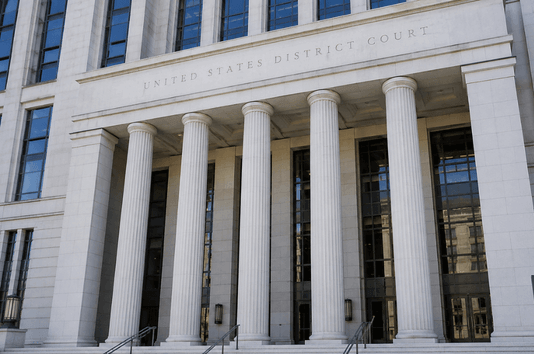
On July 14, 2026, Chief U.S. District Judge James Boasberg of the U.S. District Court for the District of Columbia issued a significant preliminary ruling in Coalition for Independent Technology Research v. Rubio, temporarily suspending enforcement of a federal immigration policy that had been used to deny visas, revoke visas, and initiate removal proceedings against certain foreign nationals working in technology research, misinformation studies, fact-checking, and online trust and safety.
Although the case has attracted attention because it involves immigration and technology policy, the court’s decision is relatively narrow. The judge did not permanently invalidate the policy or question the federal government’s broad authority over immigration. Instead, the court concluded that the plaintiffs had demonstrated a sufficient likelihood of success to justify temporarily suspending the policy while the litigation continues.
Background of the Policy
The policy originated in May 2025, when the U.S. Department of State announced a visa restriction policy intended to address situations where foreign nationals were believed to be responsible for suppressing constitutionally protected expression in the United States.
The policy relied on provisions of the Immigration and Nationality Act that permit the Secretary of State to restrict entry or take immigration-related actions when a person’s presence or activities may have significant foreign policy consequences. The initial announcement primarily referenced foreign officials involved in censorship affecting American speech.
During the following months, however, the policy was applied more broadly. According to evidence presented during the litigation, immigration officials were instructed to review visa applicants’ professional activities involving misinformation research, fact-checking, content moderation, trust and safety, and related fields.
The policy was subsequently used in several enforcement actions involving leaders of research organizations and nonprofit institutions working in these areas.
Why the Lawsuit Was Filed
The lawsuit was brought by the Coalition for Independent Technology Research (CITR), a nonprofit organization whose members include research institutions, academics, journalists, and nonprofit organizations studying digital platforms and emerging technologies.
Rather than challenging individual immigration decisions, the Coalition argued that the policy itself had begun affecting its operations. According to the organization, members became reluctant to travel internationally, participate in conferences, contribute to research projects, or engage publicly in their work because they feared potential immigration consequences. The Coalition also asserted that it had been forced to alter conferences, delay projects, and devote substantial organizational resources to responding to the policy’s effects.
What the Court Considered
Before addressing the constitutional issues, the court first examined whether it had authority to hear the case.
The government argued that immigration statutes generally require challenges involving visa decisions or removal proceedings to proceed through the immigration system rather than federal district court.
Judge Boasberg concluded, however, that this lawsuit was different because the Coalition was not asking the court to overturn any individual visa denial or removal order. Instead, it challenged the legality of the underlying policy itself. The court therefore found that it had jurisdiction to consider the claims.
The court also found that the Coalition had standing to sue because the organization demonstrated concrete impacts on its own activities, including disruption of research programs, conferences, publications, and collaboration among its members.
The Court’s Analysis
The central issue before the court was not whether the government may regulate immigration. The court expressly acknowledged that the Executive Branch possesses broad authority in immigration and foreign affairs.
Instead, the court examined how the challenged policy had been implemented.
Judge Boasberg observed that the original policy appeared directed toward foreign officials who allegedly used governmental authority to suppress protected expression.
However, the court found that subsequent guidance and enforcement actions appeared to extend beyond government officials and include private researchers, nonprofit leaders, academics, trust and safety professionals, and others engaged in research and advocacy relating to online content moderation.
Based on the record before it, the court concluded that the policy likely encompassed activities such as:
- conducting research,
- publishing reports
- advocating for policy changes
- participating in nonprofit organizations
- studying misinformation
- and collaborating with other researchers
The court concluded that these activities generally fall within the types of expression protected by the First Amendment.
Why the Court Granted Preliminary Relief
To obtain a preliminary injunction, a plaintiff must demonstrate, among other things, a likelihood of success on the merits and a risk of irreparable harm if relief is not granted.
After reviewing the evidence, Judge Boasberg concluded that the Coalition had satisfied those requirements.
The court determined that the policy, as applied, likely reached a substantial amount of protected research, reporting, advocacy, and association. Because the Coalition also demonstrated ongoing harm to its operations while the policy remained in effect, the court concluded that temporarily suspending enforcement was appropriate while the litigation proceeds.
Importantly, the court emphasized that its ruling does not prevent the government from enforcing immigration laws generally or from taking immigration action based on lawful grounds independent of the challenged policy. Rather, the temporary relief applies only to the policy at issue while the case is pending.
The decision in Coalition for Independent Technology Research v. Rubio illustrates how federal courts review executive immigration policies when constitutional questions are raised. Although the government retains broad authority to administer the nation’s immigration laws, courts may examine whether particular policies are implemented consistently with constitutional protections and statutory requirements.