



The Department of Homeland Security (DHS) published a final rule on October 13th, 2026, that permanently ended automatic extensions for Employment Authorization Document (EAD) renewals under certain conditions. A temporary interim rule was put in place last year on October 30, 2025, which eliminated the existing policy providing an extended work authorization of up to 540 days while the United States Citizenship and Immigration Services (USCIS) processes the application for renewal. That interim rule has now been put in place permanently without making any changes.
How the EAD Rule Works and Important Dates
It’s critical to understand the timeline and important dates surrounding this new EAD final rule to avoid being out of status during an EAD renewal:
- If the renewal was filed on or after October 30, 2025, no automatic extension applies. An application that is pending is not a license on its own for you to continue working.
- If the renewal was filed before October 30, 2025, you retain any automatic extension under the previous policy. You are effectively grandfathered in.
There have been exemptions. On September 11, 2026, a preliminary injunction went in favor of certain H-4 holders. This does not apply to all H-4 visas, and this exception should not be considered applicable outside these circumstances.
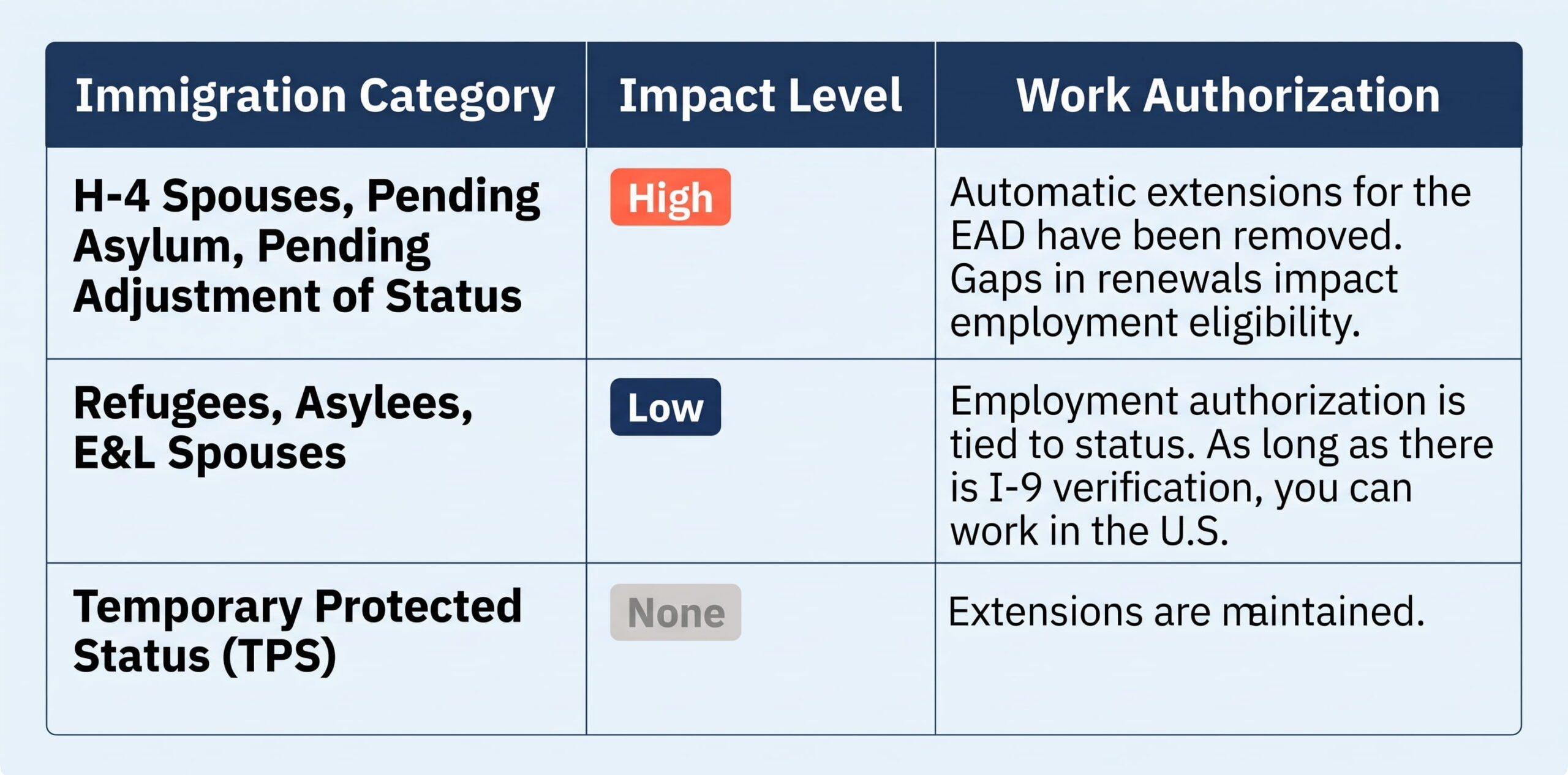
Impact for Immigration Statuses
This shift in EAD policy affects each status category differently, with some being impacted more heavily than others as they rely on the EAD for employment while others are status-based.
Employer Compliance and I-9 Implications
Removing automatic EAD extensions creates complications and compliance difficulties for HR teams of employers hiring foreign workers under EAD. Staffing can easily be disrupted if employees’ ability to work gets interrupted due to a backlog in USCIS processing. Employers need to be sure to keep track of each employee’s immigration category and their associated employment status. An expired EAD doesn’t necessarily mean that the employee is not eligible to work in the U.S.
How Visa Nation Can Help
It’s vital to understand the immigration statuses of each employee along with how their work authorization is affected by rules such as this one. Knowingly continuing to employ someone whose employment authorization has lapsed is a violation of federal law and can result in a fine from the DHS. If this becomes a pattern, criminal charges are on the table.
Don’t leave your business operations up to chance. Speak with one of our immigration attorneys if you think that your workforce is impacted by this EAD final rule to avoid fines and keep your business running smoothly.
To learn more about how this could impact you, speak to an experienced immigration attorney