Background
When it comes to transitioning from a J-1 visa to another nonimmigrant visa such as H-1B, many people face a major barrier: the 2-year home-residency requirement. This essentially requires exchange visitors to return to their home country for at least 2 years before they can adjust their status or obtain a new work visa in the United States.
Our client, a brilliant research engineer at a prominent university, found himself facing this exact challenge. His groundbreaking research focused on reducing energy consumption and water usage in data centers, a critical infrastructure requirement for recent advancements in Artificial Intelligence (AI).
While his work brought significant funding to the university from various U.S. governing bodies, he could not secure long-term H-1B sponsorship without first receiving a waiver. The stakes were incredibly high, impacting not just his career and the university’s research, but also his family’s future in the U.S.
VisaNation Case Strategy
Because the client’s government strictly enforces the 2-year residency requirement when a J-1 visa status holder receives government funding, a core part of our strategy relied on clearly demonstrating that our client was not a direct recipient of government funding, but rather that the government was funding the university research in which he played a key role.
To do this, our attorneys compiled letters of support from numerous individuals. These letters included staff from the Department of Energy involved in the research confirming the importance of his role:
“A new researcher would be unable to replicate the accumulated technical knowledge, system familiarity, and leadership responsibilities that he has developed over several years. His continued participation is therefore critical to the successful completion of the research objectives, and an interruption at this point could adversely affect project outcomes.”
In addition, our team supported the drafting of letters from the University confirming that his income was not from the government, but from the University, paving the way for a no-objection statement from our client’s embassy:
“His appointment is fully supported by the University’s salary, which is provided through ongoing research program funds under my supervision. He does not receive any direct funding from United States government sources that would independently support his appointment or participation in the Exchange Visitor Program.”
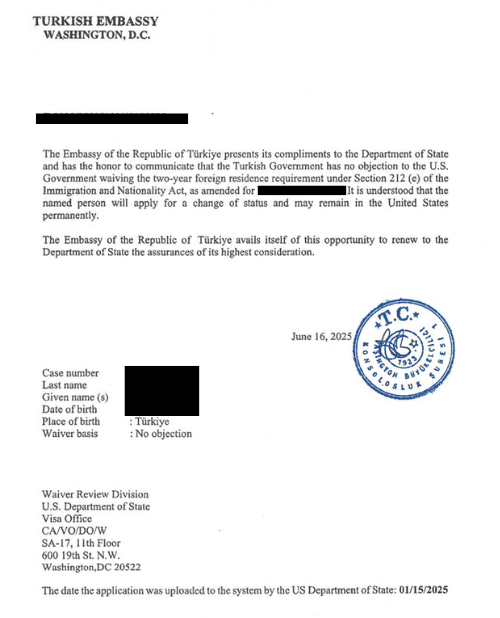
Through these recommendation letters and further evidence, including university pay stubs, our client successfully obtained a no-objection statement, a key component of the J-1 Waiver.
Verdict
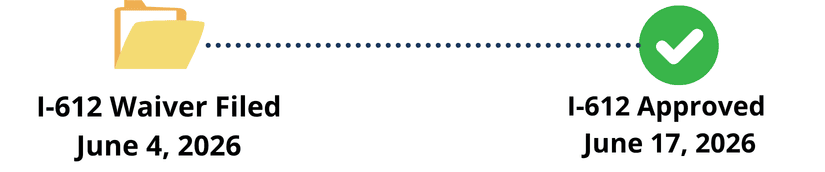
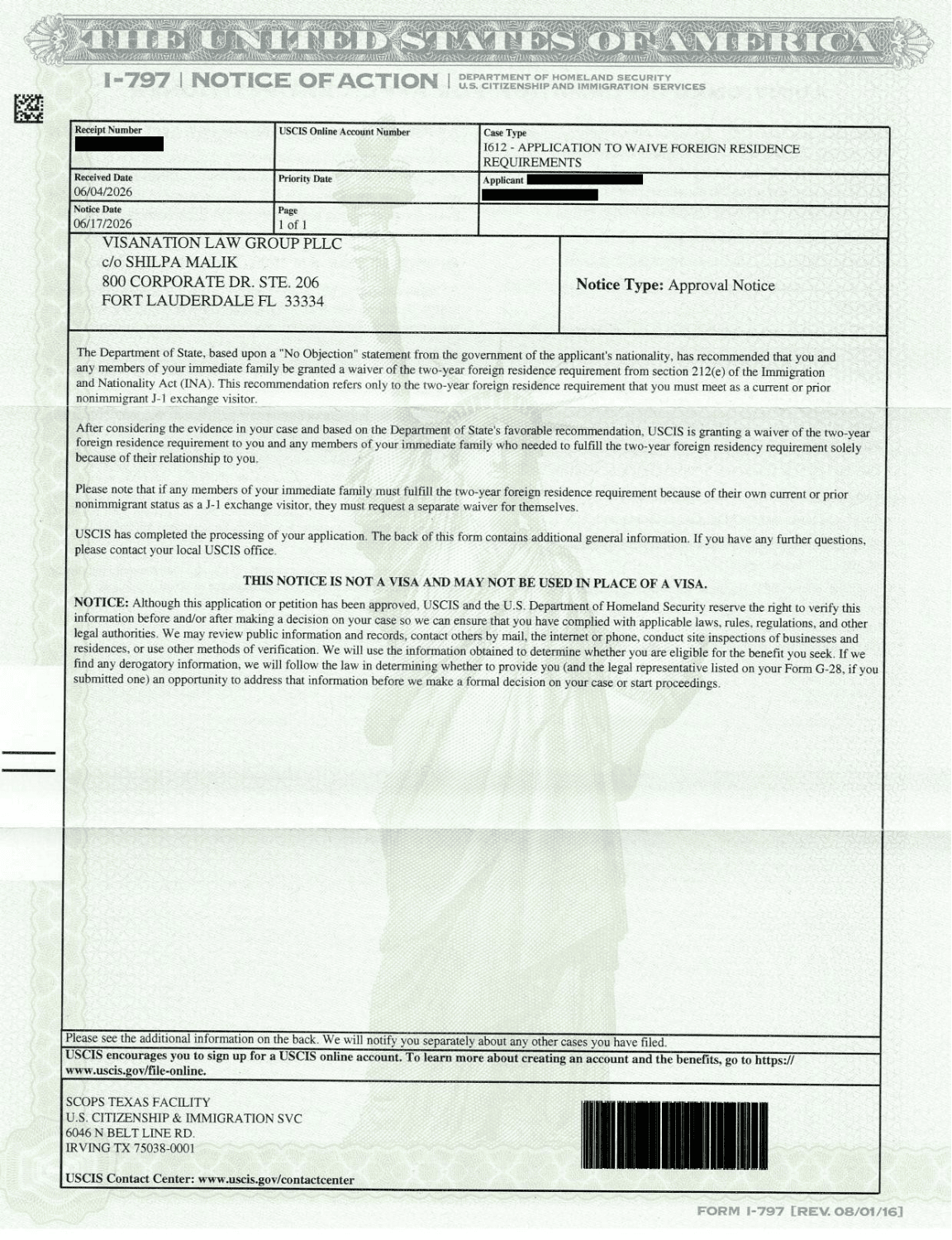
By carefully navigating the nuances of the No-Objection process, our legal team submitted a flawless petition. The J-1 waiver was rapidly approved in just 10 business days.
Thanks to this swift resolution, our client and his family can look forward to a stable future in the U.S. while his vital contributions to AI infrastructure continue uninterrupted.