
Background
In this case, we worked with a highly accomplished systems software engineer and database architect with over 20 years of specialized experience. His career was defined by contributions to major companies like Oracle and Amazon. By early 2026, he was working as an engineer on H-1B status at a major corporation, but due to a sudden organizational shift, our client faced a separation from the company and a 60-day grace period.
During this window, he was required to either find a new employer to sponsor his H-1B status or depart the country. Instead of waiting for a traditional corporate job offer, our client decided to build his own company and filed for a Certificate of Incorporation, serving as its sole incorporator.
The core challenge of an H-1B visa is that an individual cannot technically “self-sponsor.” There must be a distinct employer-employee relationship where an entity controls the worker’s duties. To overcome this, our firm utilized the January 2025 USCIS policy update regarding beneficiary-owned startups. This guidance outlined that a founder could be sponsored by their own company if a legitimate corporate governance model was established to oversee their work.
VisaNation Case Strategy
Although our client held a majority ownership stake in his company, we advised the client to appoint a separate officer as the Corporate Secretary. Through the corporate bylaws, the company successfully demonstrated that it, via the Corporate Secretary and the governing framework, retained the ultimate “right to control” his employment, evaluate his performance, and assign his technical duties.
Additionally, our team proved the company was not simply a shell company by including exhibits such as the Employer Identification Number (EIN) and a comprehensive, data-backed business plan.
To justify the need for a highly paid software engineer (over $150,000 annually) at a media startup and software company, the strategy focused on the company’s reliance on algorithmic content ranking, user behavior personalization, and real-time data ingestion pipelines. This complexity elevated the role from simple web publishing to an advanced engineering need.
Verdict
After filing the I-129 petition package, USCIS issued a surprise Request for Evidence (RFE) alleging an unallowable 63-day employment gap after interpreting the beneficiary’s final pay stub period as his termination date.
In response, the legal team successfully demonstrated that the pay stub date was a payroll processing artifact, not reflecting the actual termination date.
We evidenced this through emails from the former employer and the separation agreement, proving that the time spent was exactly 57 days, successfully placing the case within the regulatory 60-day grace period.
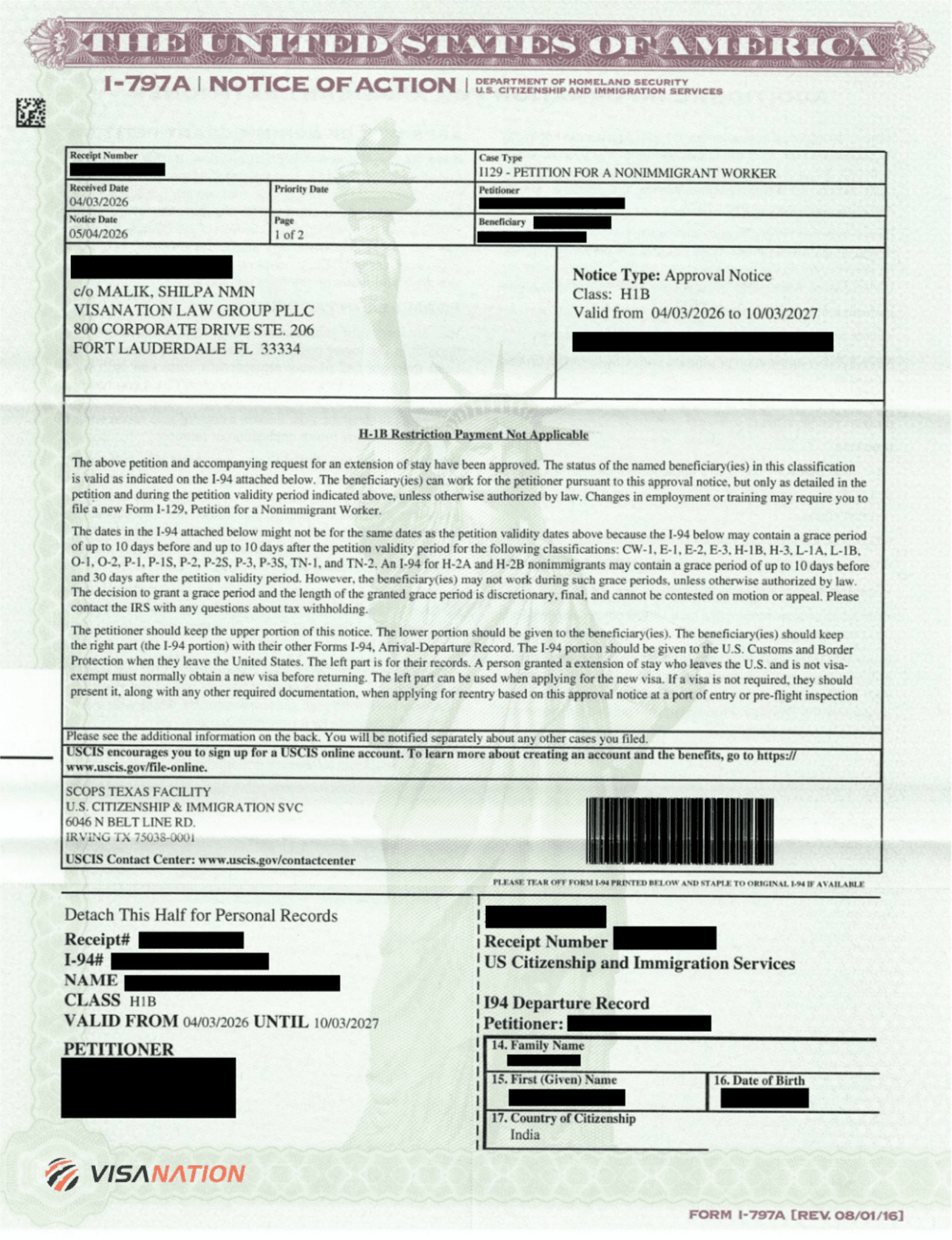
In the end, our team achieved a full petition approval in just 22 business days.


