Adjustment of status (AOS) is one of the most common pathways to a green card, with the other being consular processing. In this guide, we walk you through the process, timeline, fees, requirements, and whether it’s the best option compared to consular processing.
Get in touch with VisaNation Law Group’s experienced attorneys
What is Adjustment of Status (AOS)?
Adjustment of Status (AOS) is the final step toward securing your green card from within the United States. Once an immigrant visa number is available for your category, meaning your priority date is current, you can file your Form I-485 application to adjust your status to become a permanent resident.
If you are already in the U.S. under a non-immigrant visa status (e.g. K-1, H-1B, E-2, L-1, etc.), then you can file a form to change this nonimmigrant status to an immigrant status (green card). This is called “adjusting your status”.
Remember that USCIS adjustment of status is different than “change of status”, which indicates switching from one nonimmigrant status to another (e.g. TN to H-1B status). It should also not be confused with “visa transfer”, which usually refers to transferring sponsors. AOS only refers to going from a temporary visa to a green card.
Keep in mind that this is only available to those who already have a temporary visa. For those who are going straight to a green card or are otherwise not under a nonimmigrant status, you will need to go through consular processing. This means that you must travel to a U.S. Consulate or Embassy in your home country to participate in a one-on-one interview with a consular officer. If you are eligible for an adjustment of status, you can always choose consular processing.
What Form Is Required for AOS Green Card?
To adjust your status, you will need to file an I-485 Application to Register Permanent Resident or Adjust Status to the USCIS. Keep in mind that you need to file this; your sponsor is not responsible for this step.
How Much Is The Adjustment of Status Fee?
- The adjustment of Status (I-485) filing fee is $1,440.
- For those under the age of 14 who are filing with a parent, the AOS fee is $950.
- Exemptions apply for certain categories, such as armed forces, refugees, and more.
What is the Adjustment of Status to Green Card Processing Time?
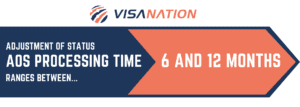
The adjustment of status processing usually takes between 6 months and 12 months from the day you file your I-485 to the day you receive your approval (or denial) notice.
Importantly, premium processing is not available for the I-485. Your adjustment of status processing time is at the mercy of your service center’s caseload.
Here is a step-by-step breakdown of the green card petition to adjustment of status timeline:
- Form I-130 or I-140: This timeline is heavily influenced by how busy your service center is and the green card category.
- It takes between 12 and 20 months to process an I-30 petition.
- If you are applying for an employment-based green card that makes use of the I-140 form, it can take anywhere from 3 – 27 months, but you can use premium processing for your petition, which reduces the timeline to 15 business days for most employment green card categories.
- Priority date waiting period: For specific family and employment cases, you may have to wait in line for a green card. This is not the case for immediate relatives (spouses, children under 21) of U.S. citizens. This waiting period is determined by our priority date, which is the day that the USCIS receives your I-130, I-140, or PERM application. That date must be referenced against the most recent final action dates released by the Department of State in their visa bulletin. A green card is not available to you until your priority date matches or passes the final action date in your category. The timeline for this varies widely, so it’s advisable to speak with an immigration attorney to learn more about your case.
- Adjustment of status: processing time is typically between 6 months and 12 months from the day you file your I-485 to the day you receive your approval (or denial) notice.
- Biometrics appointment: shortly after applying for adjustment of status, you will receive a biometrics appointment to take fingerprints and a photograph.
- Interview: USCIS reserves the right to require anyone adjusting their status to appear for an interview at a USCIS office. Be sure to bring the originals of all required documents to this interview. The interview appointment may be set several weeks in advance, extending the adjustment of status timeline.
- Request for Evidence: Much like with nonimmigrant visas, the USCIS may ask for more documentation to support your eligibility for your selected green card. You will be given a narrow window to respond appropriately, so it is a good idea to take RFEs directly to your immigration attorney. If you receive an RFE, this can delay your application anywhere from 2 weeks to 2 months.
- Getting your green card: Once the I-485 is approved, your status will be adjusted to lawful permanent resident, and your card will be mailed to you within 2-3 weeks.
Steps to Getting a Green Card Through Adjustment of Status
Just like every immigration process, there are clearly outlined steps that you must take when applying for a green card through AOS. These steps are as follows:
Step 1: Eligibility
You must verify that the visa you have allows you to apply for adjustment of status.
Step 2: Submit an Immigrant Petition to USCIS
You and your sponsor will have to submit a petition depending on your current visa. If you came to the U.S. through:
- Family-based green card, then you must submit Form I-130, which costs $625 for online filing or $675 for paper filing.
- Employment-based green card: your employer must submit Form I-140, which costs $715.
- Humanitarian immigration, then you must submit Form I-730, which costs $0.
- Special programs for juveniles then you must submit Form I-601, which costs $1,050.
If you don’t fall under any of the above categories, do not worry. This means that you must inquire with USCIS or contact an immigration attorney to learn about the correct procedure for you to follow.
Step 3: Wait for Approval
Depending on your immigration category, the wait times may differ. You should check visa availability for your category of applicants.
Step 4: Submit Form I-485
Once your priority date becomes current, you can submit Form I-485, Application to Register Permanent Residence or Adjust Status.
Step 5: Attend Biometrics Appointment
In almost all instances, USCIS will request you to attend a biometrics appointment. USCIS will set the time, date, and location of the appointment. You must attend your appointment in order for your AOS application to progress.
Step 6: Attend the Interview
Some applicants may be requested to attend an in-person interview. You will be requested to present your original documents during the interview as well as be asked a series of questions.
Step 7: Request for Further Evidence
In some cases, the USCIS requests that applicants provide additional evidence. You will be asked exactly what types of documents you must provide.
Step 8: Decision Granted
You will receive a written decision by mail. The USCIS will notify you of whether your application to adjust status is accepted or denied. If denied, the USCIS will state the exact reasons for their decision. Don’t forget to check the status of your application.
USCIS Adjustment of Status vs Consular Processing
At face value, it would seem that adjusting your status is a better option, as consular processing means traveling all the way to your home country to go through an interview. The expense, inconvenience, potential job interruption, and the intimidating factor of the interview are all perfectly good reasons to adjust your status.
However, here are a few reasons why some people choose to go through consular processing when they are eligible for adjustment of status.
- If your home country is close to the U.S. (such as Canada or Mexico), then it may be cheaper to travel to a Consulate or Embassy rather than pay the hefty fee that goes along with adjusting your status.
- Consular processing may also be a more expedient option. Depending on the caseload of your Consulate or Embassy, you may only need to wait a few weeks rather than the six to twelve months you would need to wait for your I-485 to be processed.
USCIS has released an important memo which increases the scutiny on adjustment of status applications, particularly for students, those on B-1/B-2 visas, andother single intent visas like the TN.
Adjustment of Status Document Checklist
Just like with any immigration process step, it helps to be completely prepared before submitting any forms. Here is the adjustment of status checklist of items you will likely need:
- The I-485 form
- Two portrait photos of yourself that adhere to the photo guidelines
- A copy of the approval notice from your I-130 or I-140 petition
- A copy of your birth certificate
- A job offer letter (if you are applying for an employment-based green card)
- Marriage certificate (if you are applying for a marriage-based green card)
- Your I-94 arrival/departure card
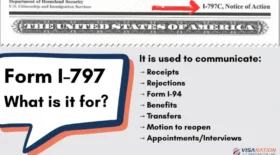
- The I-797 approval notice from your previous nonimmigrant status
- A copy of any Employment Authorization Documents
- You may also need the results of a medical examination, found in Form I-693. This should be in an envelope that has been sealed by a doctor and approved by the USCIS.
- Your filing fee of $1,440 (depending on your age)
Keep in mind that this list is not exhaustive. Some nonimmigrant statuses, like the J-1 or F-1, require different documents and so will have varying checklists for adjustment of status.
Any dependents adjusting their statuses along with you will also need to submit their own documents. To get a clear understanding of all that will be required of you for this last step toward a green card, consider retaining the services of an experienced green card attorney.
Based on the latest USCIS memo, it may be important for your case to include documentation that shows that the positive factors in your case,such as strong family ties, community ties, and good moral character, outweigh any adverse factors.
Why Would My Adjustment of Status Be Denied?
Many people wrongly assume that, once your petition has been approved, getting the I-485 approved is only a formality. In reality, the USCIS understands that it often takes a long time to go from filing the petition to filing the I-485. Much can happen within that time, so your eligibility will be reassessed. Here are some common reasons why adjustment of status forms are denied:
- You have violated your current nonimmigrant status by committing a crime in the U.S.
- You have overstayed your nonimmigrant visa validity period and have been considered “out of status”.
- You have worked in the U.S. without receiving work authorization.
- You entered the country illegally.
- You entered the country without a visa (as a crew member or in transit).
- You are a K-1 visa holder who did not marry your fiance within the 90-day window.
These are just some of the things that would make you ineligible for adjustment of status even after your petition has been filed and approved. To best avoid these scenarios, work with your immigration attorney to make sure that everything is being done correctly. Additionally, with the release of the memo from the USCIS that suggests there will be increased scrutiny of adjustment of status cases, it’s advisable to speak with a qualified attorney.