



It’s increasingly common for the United States Citizenship and Immigration Services (USCIS) to issue Requests for Evidence (RFEs) for documentation supporting the O-1 extraordinary ability criteria, with nearly one in five petitions receiving an RFE. No matter how eligible you may be, failure to provide a strong argument as a response to your O-1 visa RFE may result in denial.
In this guide, learn about the top reasons for an O-1 RFE, how to prevent them in your initial petition, the latest denial rates, and what makes a good cover letter.
Hire an experienced VisaNation attorney for an effective O-1 RFE Response
What is an RFE?
A Request for Evidence (RFE) is an inquiry that the USCIS sends when there is a lack of documentation, supporting evidence, or clarity in a visa petition. In the course of processing a visa petition, if the USCIS comes across any claim that is unclear, not well-supported, or not in line with the standard required, an RFE will be issued to the applicant.
Because every claim must be substantiated before a decision can be made, the immigration officer in charge of your case will have to put your application processing on hold until you have provided the requested evidence. You will be given a deadline to submit the information. Failure to do that will prolong the processing and result in further delay. An O-1 RFE may be issued to request further information about the petitioner or beneficiary.
Latest O-1 Visa RFE Rates
According to the USCIS’s latest data (Fiscal Year 2025), the RFE rate for the O-1 visa is 19.7%. The overall approval rate is fairly high at 93.9%. Over the past five years, the approval rates have remained fairly steady, while completions with RFEs have fallen from 27.8% in FY 2021 to 19.7% in FY 2025.
|
Year |
Approval Rate |
Denial Rate |
Completitions with RFE (%) |
|
FY 2021 |
91.4% |
8.6% |
27.8% |
|
FY 2022 |
94.6% |
5.4% |
20.7% |
|
FY 2023 |
93.2% |
6.8% |
22.6% |
|
FY 2024 |
94.5% |
5.5% |
19.0% |
|
FY 2025 |
93.9% |
6.1% |
19.7% |
Nonetheless, petitioners and beneficiaries of the O-1 visa need to understand common scenarios that lead to RFEs, learn how best to avoid them, and, if need be, how to counter the request with a well-prepared, convincing argument.
Common Reasons for an O-1 Visa RFE
The USCIS can issue an RFE for a variety of reasons. However, due to the peculiarities of the O-1 visa, most of the RFEs have to do with meeting the evidentiary criteria, documenting the itinerary, and consultations.
Published Material
The USCIS may deem your evidence of published material insufficient and may issue an RFE. In some cases, the RFE may argue that your published material is not impactful enough to establish that you are one of the best in the field. The RFE may also argue that the journal(s) or newspaper(s) that published your work do not qualify as a “major publication,” which is the standard requirement.
A persuasive RFE response may include new explanations and evidence that clearly demonstrate the importance of your contributions in the field, such as widespread citation or adoption rates. Letters from experts in the field that can attest to the influence of your published material in your field, particularly if it is in a niche area, can sway the USCIS officer to accept your arguments.
Judging the Work of Others
You are likely to receive an RFE on this criterion if the USCIS finds your evidence insufficient or deems that the panel/event in which you judged does not meet USCIS requirements. For this criterion to count, you must ensure:
- You judged the work of a peer or professional in your field. Examples that would likely receive an RFE would include an attending physician who supervises and judges the work of student doctors daily, or professors grading the paperwork of student theses. This type of judging is not only a typical function of the job, but also of a subordinate rather than a peer.
- Any evidence shows you were not only invited to serve on an expert panel, but also evidences that you did the work. Failing to provide evidence, such as follow-up emails or evidence of your judging on the panel, can result in an RFE.
- The panel you judge on is of significant national or international reputation, reserved for experts in the field.
- The panel is not pay-to-play. The panel you judge is not something that you can pay to guarantee access, as it does not evidence that you are at the top of your field.
Original Contributions of Major Significance in Your Field
Simply publishing material will not count, as it does not indicate widespread impact. As different fields have varying levels of popularity, such as cancer research vs nautical archaeology, it’s important to outline the work’s impact in relation to the field.
This criterion requires that your contribution must be original and of importance to other experts in the field. The USCIS must see evidence that the published material generated widespread public commentary among professionals in the field.
This can be in the form of support letters or testimonies from other professionals who discuss or comment on your published work, or evidence that the work has been implemented by others. If these supporting documents are lacking in your claim for this criterion, you will likely receive an RFE.
Employment in a Critical or Essential Capacity
This criterion can also be broken into two steps:
- Proving that the role you occupied was critical or essential
- Evidencing that it was in a reputable organization
Sometimes, the USCIS may agree with you on one of the two but will want you to prove the other part further.
For example, there have been instances in which the immigration officer will accept the evidence that you indeed held a critical role in an organization, but will question the distinguished nature of the organization, which may lead to an RFE.
When proving this point initially or in an RFE, it’s vital to secure letters from high-profile individuals in the company who can attest to your contributions.
Evidence of High Salary
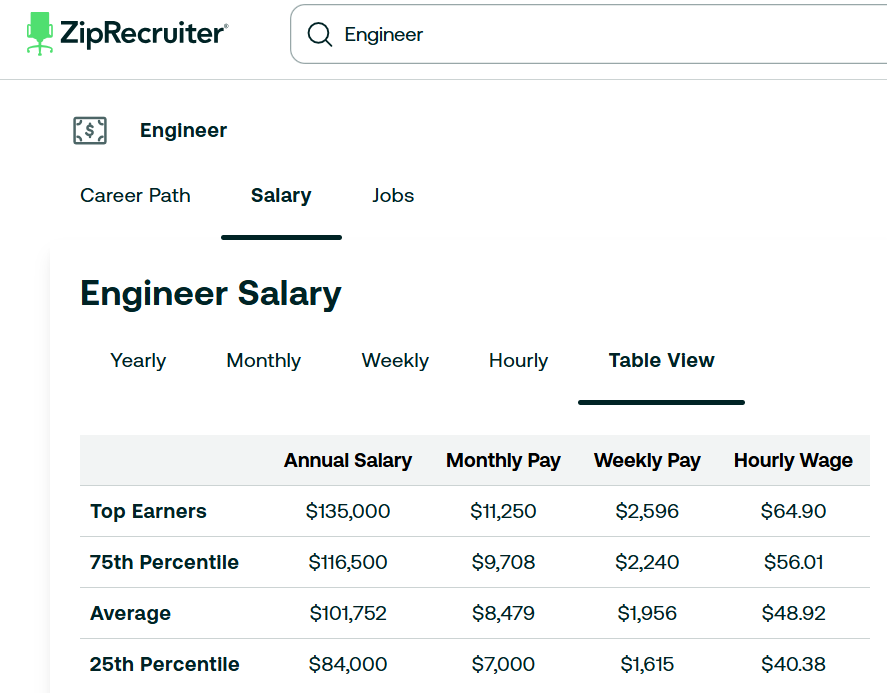
This criterion requires you to earn or will earn a high salary or other compensation in relation to others in the field. It is a way to prove that your extraordinary ability has placed you in a position that makes your pay higher than what is commonly granted in the field. If the USCIS is not convinced, you may get an RFE.
To help prevent an RFE or to argue the validity of the initial petition in an RFE response, our attorneys advise using multiple data points, including
- The Department of Labor wage data statistics
- The U.S. Department of Labor’s CareerOneStop database
- Compensation platforms such as ZipRecruiter and Salary.com.
Membership of an Association
Not all associations count when it comes to demonstrating your extraordinary ability. To satisfy this requirement, you need to submit evidence showing that you were admitted as a member as a result of your extraordinary contributions or achievements in the field.
You can provide information that establishes that those who reviewed your membership eligibility are recognized international or national experts in the field. You should also present the association’s bylaws showing that the requirements for membership are of a high standard.
VisaNation Tip
Avoid memberships that only require monthly dues, and be aware of “profile building schemes” – companies that artificially inflate your profile with low quality pay-to-play awards, events for judging, or scholarly articles in low impact journals. In the case that you do not meet the standards of the O-1 visa, building the evidence to meet the criteria often takes months or years, and should be done under the guidance of an experienced O-1 attorney.
How to Respond to O-1 Visa RFEs
When you receive RFEs on any of the above or any other O-1 evidentiary criteria, the most important aspect is crafting a comprehensive response that addresses all concerns of the adjudicating officer. It is highly recommended that you work with a specialized O-1 visa immigration attorney with experience handling RFE cases.
An RFE is only issued once. In other words, you have only one chance to clarify your case and convince the USCIS.
The following tips are very important when responding to an O-1 visa RFE:
Understand the Reasons for the O-1 RFE
The RFE may not be straightforward and may contain jargon or specific language with complex meaning. It is important to understand exactly what you are being asked to provide.
If there is anything that needs clarification, it is advised to contact an immigration attorney or the USCIS for clarification. It is inadvisable to respond until you are certain of what it requires of you.
Develop a Comprehensive RFE Response and Concise Cover Letter
When responding to an O-1 RFE, USCIS officers instruct applicants to attach the original RFE notice for their reference.
A persuasive RFE response then includes a cover letter that reiterates what was lacking in the initial petition, according to USCIS. It also clearly informs the officer of the direction of the response, including how it aims to address those claims.
For example, an RFE response may abandon one of the criteria that was questioned, and the cover letter should outline that the response introduces evidence attempting to prove the beneficiary qualifies for a new criterion. Or, the cover letter may explain that the response addresses the criterion that was questioned by the officer, introducing new evidence and explanation.
Next, a successful O-1 RFE response lays out the legal basis for each criterion to be argued, followed by introducing a new narrative ideally bolstered by new evidence.
Importantly, an O-1 RFE response cannot include evidence that proves eligibility for a criterion after the Form I-129 was filed. For example, if a new patent was granted after filing, this would not be acceptable evidence. However, a new letter of support clarifying an achievement or association initially questioned by the USCIS officer, but made before the initial filing, is acceptable.
Case Example:
An RFE was granted to the beneficiary on the basis that there is insufficient evidence regarding their professional membership in the original petition. An effective RFE response first reiterates the legal basis outlined by USCIS, including that the association requiring outstanding achievements for admission, in which those achievements are judged by experts prior to admission.
Following the legal basis, and RFE response should introduce new evidence, such as a detailed letter from an association committee member clarifying the stringent membership criteria of the association and how invitation is only extended to those with sustained extraordinary achievements, substantial professional contributions, and leadership capabilities recognized by their peers and industry experts.
An even stronger letter details how the candidate’s achievement have impacted the field outside of their own place of employment, showing they are truly an individual who has risen to the top of the field.
Lastly, an effective RFE would introduce further documentation, such as the detailed entry requirements of membership that clearly demonstrates a high level of achievement is necessary.
Do Not Procrastinate
While it is advisable not to rush or act rashly in responding to your O-1 RFE, it is also very risky to procrastinate. The issuance of the RFE automatically puts your petition on hold. The earlier you submit your response, the faster you will receive a decision on your petition.
Moreover, your O-1 visa RFE will come with a strict deadline, which may be a particular date or number of days. Failure to submit on or before the deadline will likely lead to denial. If it was issued with a deadline that is listed as a number of days, you need to start counting from the date that appears on the RFE. This date is the issuance date, which may not be exactly the same as the date you received it.
Does an O-1 RFE Mean Denial?
An RFE does not mean your O-1 visa application is or will be denied. It serves as an indication that the USCIS may be willing to grant your visa request if you provide a more convincing explanation or documentation for the missing evidence.
Sometimes, it may just be an error in the information you entered in your petition or a missing item. This is why you should not panic after receiving it. Many O-1 applicants have had their visas approved after receiving RFEs.
Is an RFE The Same as a NOID?
An RFE and a NOID are two different things entirely. A NOID—or a Notice of Intent to Deny—represents a more complicated case. It is usually issued after the immigration officer has gone through your petition and felt that either you or your employer does not have the required qualification for the O-1 classification, either as a beneficiary or a petitioner.
An NOID serves as a way of warning you ahead of time that the chances of receiving a visa denial are much higher and that you are likely to encounter the same issue if you re-file. Again, like the RFE, it is not an automatic disqualification; you may still get an approval if you have strong evidence. Keep in mind, however, that your chances of overturning a NOID are lower compared to RFE cases.