Background
Julia, a U.S. citizen from Florida, met her fiancé, Nikolai, a Russian citizen, in Prague, Czechia, in November 2019 while studying abroad. They were both studying international economics, and after some time, their study dates became dinner dates. Their connection quickly grew into a long-distance relationship as Julia left in December, but then COVID hit. Over the next couple of months, they attempted to travel back and forth to see each other, but with COVID-19 travel restrictions, it was hard to do so.
In 2021, they met up in Tbilisi, Georgia, and lived together for some time. They were working remotely for a couple of months and built a new routine together. While they were there, they introduced their families to one another, which was an important step that solidified their relationship. After two years of knowing each other, Nikolai proposed to Julia while they were in the Georgian countryside. They were young and in love, and at the age of 21 years old, they knew that they were soulmates. After celebrating their engagement with family, Julia and Nikolai were ready to plan their future together in the United States. As Nikolai is a foreign national and was still finishing up some work abroad, they wanted to determine what would be the best path forward to ensure that Nikolai could finish up his work. This is when they reached out to our team.
VisaNation Case Strategy
Our team determined that the K-1 fiancé visa process would be the best route. This would allow Nikolai to finish his work abroad while the fiancé visa was processing, and then travel to the U.S. to get married. The process required strong evidence of their genuine relationship and careful attention to their timeline.
We created a strategy focused on three goals:
- Establishing the authenticity of their relationship
- Documenting all their meetings (Including all in-person encounters)
- Demonstrating their clear intent to marry within 90 days of Nikolai’s arrival in the U.S.
The first step was working with the couple ot gather supporting documents. Some of the documents included travel records, flight itineraries, passport stamps, hotel receipts, and photographs of the two of them. We also had affidavits from their family members, writing about how they knew the couple. Next, we advised our clients to draft strong personal statements to describe their relationship timeline, proposal relationship history, and their shared plans for their life in the U.S. To ensure a smooth review process, our attorneys prepared a clear K-1 petition packet with a concise cover letter explaining how all the evidence met every USCIS requirement under INA 214 (d). With Russian embassies being affected by their limited hours of availability, obtaining a K1 visa for a Russian national does pose the possibility of delays. Luckily, for our client, we submitted everything with enough evidence to avoid any possible delays.
One thing to note is that with fiancé cases, is that you can provide all the documents to the USCIS officer, however, if they have any reason to suspect your case, they will flag it. Our team carefully crafted their love story to show not only the factual evidence but also the sincerity and consistency throughout their relationship.
Verdict
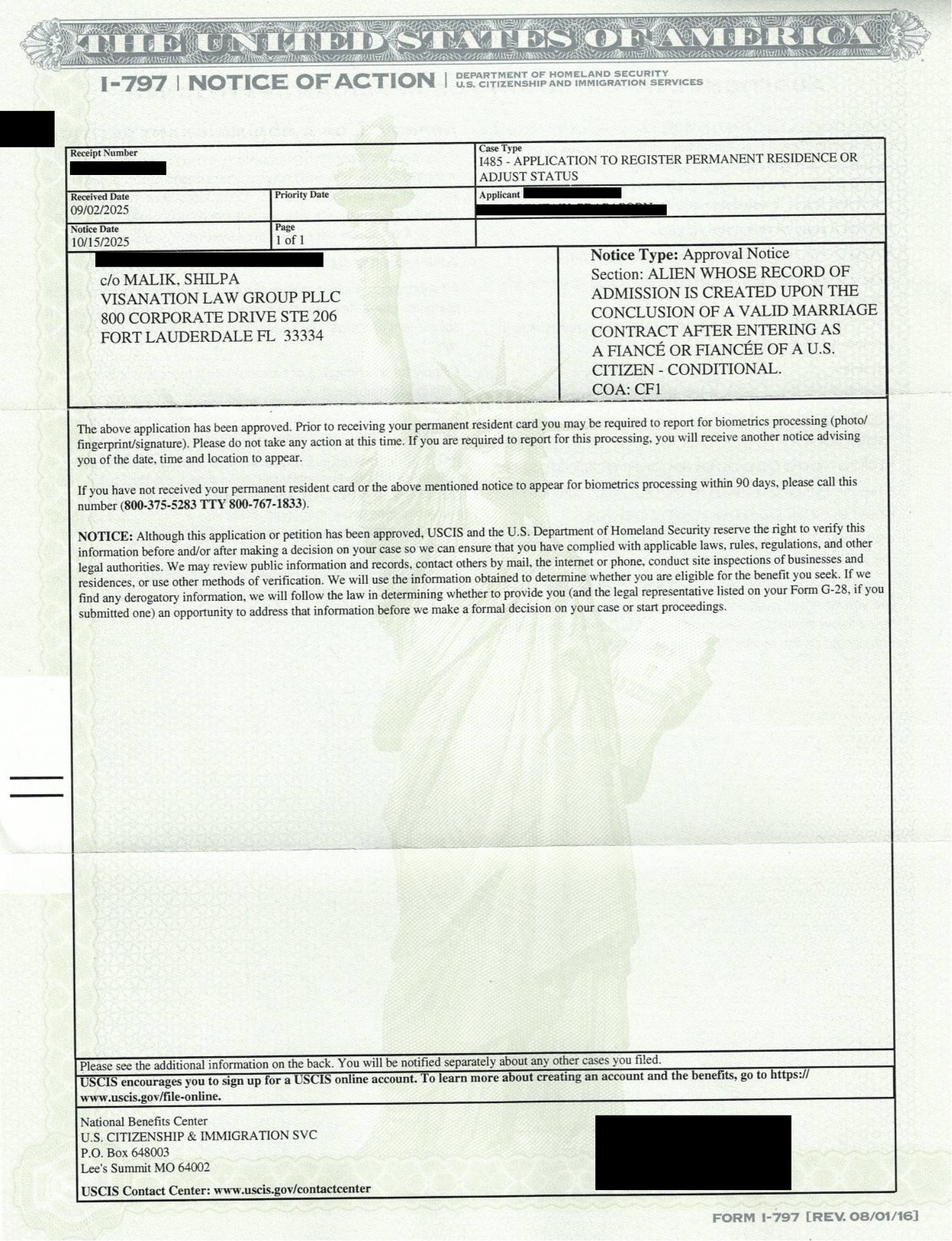
Without any delays, Nikoali’s green card was approved within a year! No RFEs were issued, and the entire process from the K-1 to a green card took around 2 years.