Background
Priya’s journey began when she was selected in the H-1B lottery. With a bachelor’s degree and an impressive foreign registered nurse license, she aspired to contribute her skills to the U.S. healthcare system. However, obtaining an H1B visa for nurses poses unique challenges, as Priya’s prospective role had to qualify as a specialty occupation. Under U.S. Immigration law, the standard registered nurse positions do not fall under a “specialty occupation,” which means the position requires more complexity. With many hospitals in the U.S. lowering education requirements, more people were now becoming nurses. We had to find evidence to support that Priya met the “specialty occupation” as a nurse for the NICU unit.
VisaNation Case Strategy
Priya’s future employer, a leading healthcare staffing agency, recruited her for a Neonatal Intensive Care Unit (NICU) position. Her responsibilities included:
- Providing direct patient care for ill infants
- Identifying the nursing needs and problems of the patients
- Acting as a senior nurse when needed
- Perform procedures like IV insertion, wound care, oral and ET suctioning, and post-mortem care
- Provide support to families, educate patients, and the public on various medical conditions
The role clearly demanded advanced expertise and technical skills, aligning with her bachelor’s level education. Still, USCIS’s strict scrutiny of nursing H-1B applications meant that presenting an exceptionally strong case was crucial for Priya to obtain an H-1B visa.
Our Approach
We built a compelling position to demonstrate that Priya’s role was a specialty occupation. We included:
- Employment Agreement: Outlining her advanced responsibilities and the complexity of the role
- Job Postings: Highlighting the industry need for nurses with bachelor’s degrees in specialized roles.
- Academic Evaluations: Confirming that Priya’s foreign qualifications were equivalent to a U.S. bachelor’s degree.
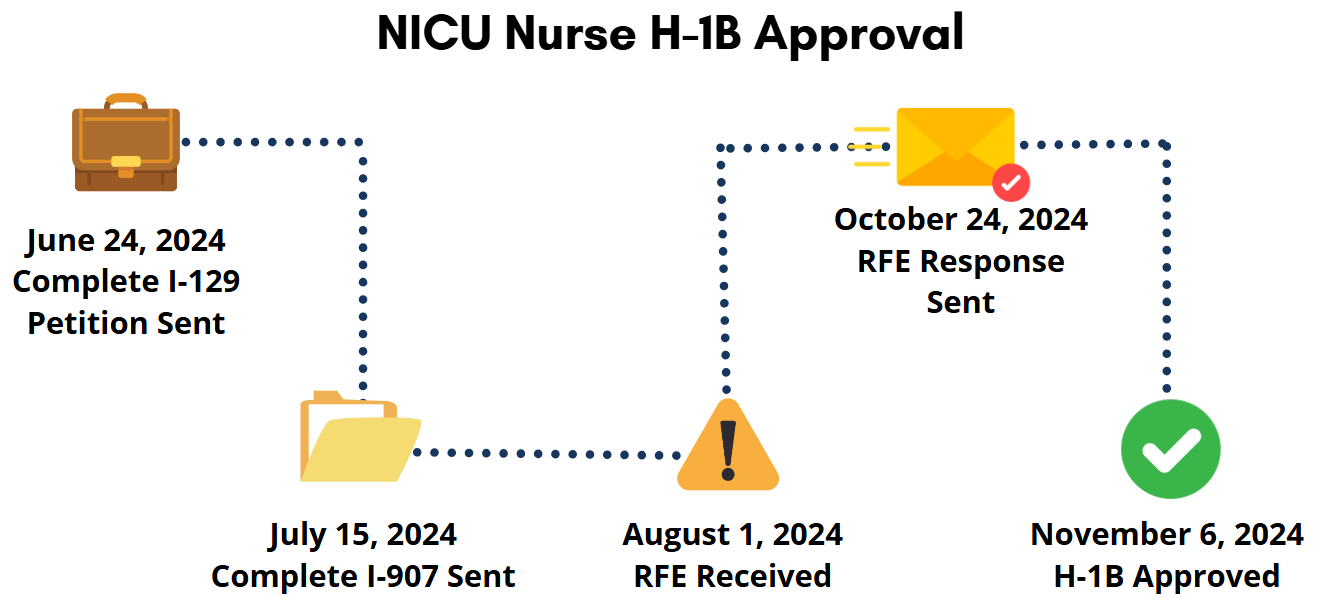
Our team emphasized how Priya’s expertise and training were critical for working in the high-stakes NICU environment. To ensure speedy processing, we filed the petition under premium processing.
Issue
When USCIS issued a Request for Evidence (RFE), they questioned whether Priya’s role met the specialty occupation criteria. With hospitals widely accepting associate degrees, we needed to prove that her position required more advanced qualifications. There is an ongoing shortage of NICU nurses in the U.S., and that was a major supporting point in the RFE response. Even though more people were becoming nurses, many were not qualified to enter the NICU unit. We responded decisively, showcasing how Priya’s duties demanded a depth of knowledge and technical ability that only a nurse in her position could provide.
Verdict
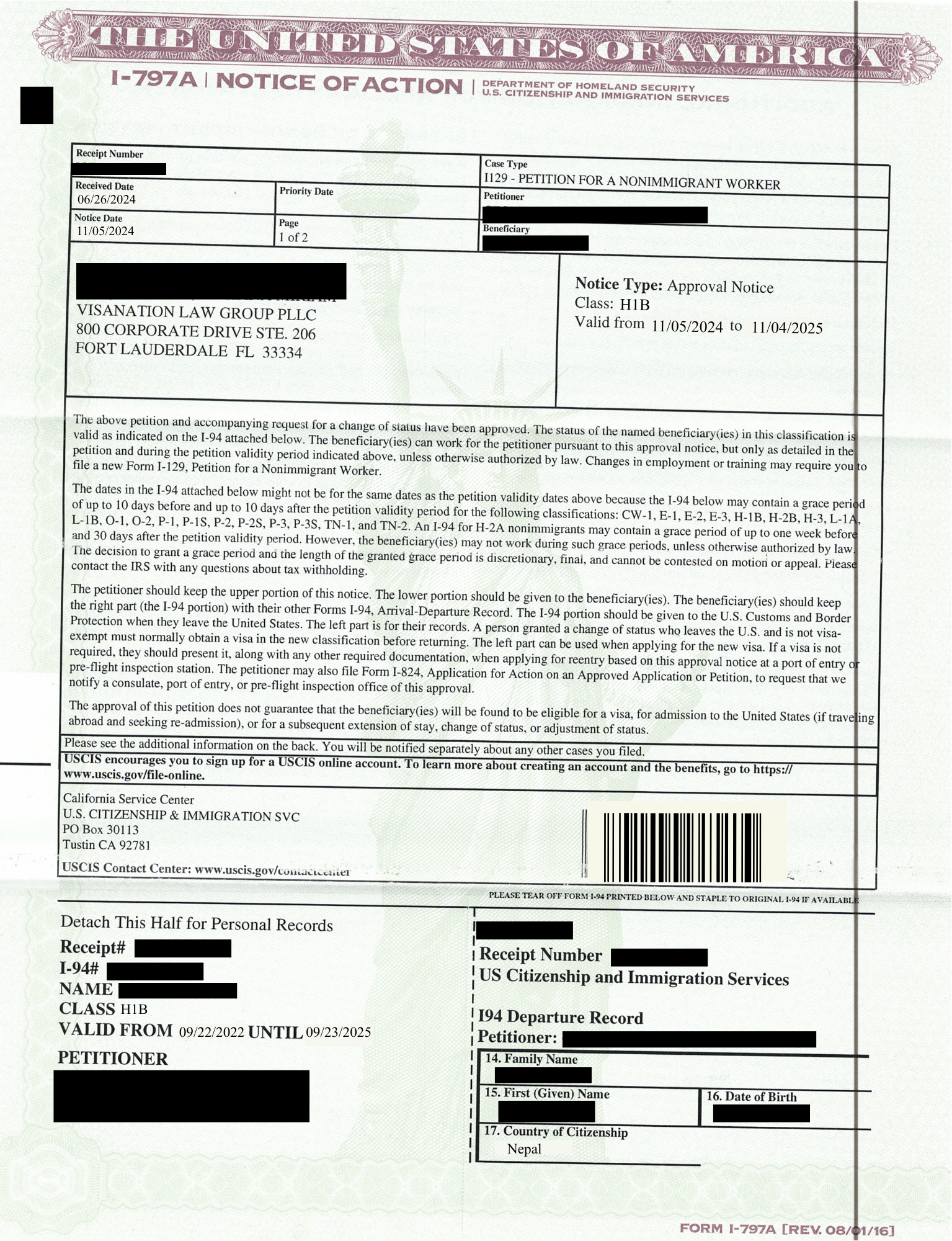
USCIS approved Priya’s H-1B visa within one week of receiving our response! This approval highlighted the importance of skilled nurses in specialized healthcare roles and proved that with the right strategy, even challenging H-1B visas for nurses can be approved.