Background
Jonathan, a trailblazer in the nuclear energy technology sector, played the dual role of CEO and founder of his company. With a laser focus on the advanced nuclear energy landscape, his startup emerged as a leading player in this innovative industry.
The EB-1A is for qualified individuals under the first preference employment immigration category for Aliens of Extraordinary Ability. Jonathan’s sustained and remarkable contributions in his field showcased his exceptional aptitude for success.
VisaNation Case Strategy
Jonathan had attained a high level of expertise and rose to the top of his endeavors, receiving national recognition for his accomplishments. His primary focus was on research concerning microreactors, where he had goals of his device being used for industrial heat, research, and charging vehicles on highways. Our team meticulously gathered and presented substantial evidence showcasing Jonathan’s unparalleled contributions. We highlighted the rarity of the new microreactor developments in the U.S. over the past decade, further emphasizing the pioneering nature of his work. It was our job to explain how he exceeded the standard for EB-1A petitions, especially as a startup founder, and we had to provide enough evidence to justify that.
Step 1: Proving He Met the Criteria for an EB-1A Visa
According to Kazarian v. USCIS, satisfying the two-part approach outlined in this case was crucial to demonstrating extraordinary ability in the field. We needed to establish that his continued presence in the U.S. would substantially benefit the U.S.
Under Section 203(b)(1)(A) of the Immigration and Nationality Act, an immigrant must demonstrate either national or international recognition for their work in their field of expertise, and that their continued permanent residence in the United States will continue to substantially benefit the United States.
He met the criteria as he:
- Published materials in his field of work on nuclear energy
- Served as the co-founder and CEO of his company, thereby building a distinguished reputation
- Received significantly high remuneration for his services, compared to others in the field
Step 2: Provide Evidence
Under the requirements of the USCIS Policy manual, it was important to include material about our client in major trader publications or media covering his work in the field.
We provided a list of Jonathan’s publications, explaining their content and how his work was the primary subject of the material. We include the titles, dates, sources, significance, and the target audience he aimed to reach with his publications. This strategic approach not only showcased his expertise but also demonstrated his ability to engage with and influence decision-makers in competitive industries.
Moreover, we emphasized Jonathan’s success in securing substantial investments, illustrating his influence on over 14 million decision-makers within the electric utility industry through shared publications. There was substantial media coverage of Jonathan’s publications, and his company received coverage from various industry-specific media outlets specializing in nuclear energy innovation.
In addition to his professional achievements, our team gathered testimonies from Jonathan’s colleagues to attest to his critical leadership role within startup ventures. Previously, our client served as the CTO for another HR start-up company, and his colleagues wrote letters of recommendation stating that his contributions to the team were key to building the culture and excellence at their business. The company earned a distinguished reputation, having raised over $50 million in venture capital, with Jonathan playing a critical role in making that happen, thereby meeting the standards outlined in the USCIS Policy Manual.
Verdict
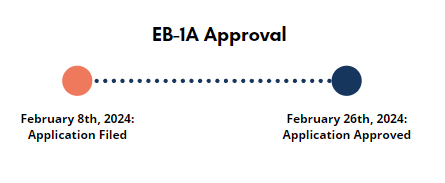
After 18 days from submitting Jonathan’s petition, it was approved. Throughout the process, our team worked to ensure that our client’s case was meticulously prepared and compellingly presented. By highlighting Jonathan’s dedication to advancing business and research in nuclear energy technology, we showcased the immense value he brought to the U.S. This achievement underscores the significance of fostering innovation and expertise in critical sectors.